Featured

Trinity Blog Post

Adoration of the Trinity – Albrecht Dürer

The painting I chose was Adoration of the Trinity by German Renaissance Artist Albrecht Dürer. Finished in 1511, I think this beautiful work of art gives a dazzling vision of heaven, and perfectly represents the vision of the trinity.

The crowded altar depicts the trinity, as God is holding a crucifix with Jesus on it. Above them in a cloud of light is the Holy Spirit in the form of a dove. Durer also paints many other saints of heaven, including John the Baptist and the Virgin Mary. This painting gives an interesting perspective, as you are both on earth and in Heaven at the same time.

Jesus, God, and the dove representing the holy spirit are three different physical things in this painting, but they should be interpreted as one triangular unit. The Nicene creed is symbolized as Jesus is being crucified, with God and the Holy Spirit looking over him. 

This painting stood out to me more than any of the others for me because of the genuine beauty of it. Although it may be a typical depiction of the trinity, The beauty and depth of the painting made it impossible for me to pass on it. I found myself getting lost in the piece due to its depth. This beautiful work of art represented the Trinity in an incredibly bright and interesting way. 

The Way

The character that I chose is the main character of this film, a California doctor named Tom Avery. The journey that Tom goes on puts him on many of Father Martin’s paths to God. His son dies while trying to complete the Camino de Santiago. Avery is an upper class man enjoying a life of luxury, seemingly cutoff from the rest of society. The sudden death of his young son shatters his world image, along with his faith. When Tom goes to church and is asked by the priest to join him in prayer, he questions him. His lack of faith in God due to the traumatic, while not abnormal, puts him directly on the Path of Disbelief. 

Tom’s dangerous journey puts him directly on the Path of Exploration. This is indicative of a typical relationship with God, with the many ups and downs he goes through. By no means is this an easy journey, as not everyone is successful making this journey. Along the way he meets a lot of new people, from many different backgrounds than him. All of this is representative of an explorative relationship with God. Everyone he meets including, Jack, Joost, and Sarah come from completely different backgrounds all looking for different results from the pilgrimage. This is similar to how everyone wants something different from their relationship with God. Tom leaving his comfort zone and having a positive mindset on this journey with his new friends shows he is on the Path of Exploration.

When Tom finally reaches Santiago de Compostela, his pilgrimage is over. He has finished the journey in Daniel’s name and presents his ashes to James’s casket, as well as requesting Daniel’s name be on the completion certificate rather than his. Rather than going home as Tom might have done if the true power of God had not affected him on this trip, he decided to continue the pilgrimage to Muxia. While still dedicated to his son and his religious aspirations, Tom is continuing his own religious dreams, but this time on his own and for himself. Through this action, Tom shows he is on the Path of Belief.

6 Paths to God Playlist

  1. Path of Belief

Good Life – Kanye West

This is a very upbeat song that has to do with being grateful for what you have and believing in yourself. 

“Like we always do at this time

I go for mine, I got to shine

Now throw your hands up in the sky

I g-go for mine, I got to shine

Now throw your hands up in the sky”

Having faith and believing in God as well as your ability to serve him is crucial to the Ignatian way.

2. The Path of Independence

Blackbird by the Beatles

“Blackbird singing in the dead of night

Take these sunken eyes and learn to see

All your life

You were only waiting for this moment to be free”

This song is about waiting for the moment to become truly independent, and those following this path have a healthy sense of autonomy that lets them see the world in a unique way. 

3. The Path of Disbelief

Hear me Calling – Juice Wrld

“Do you hear me callin’?

Do you hear me callin’?

Me no want no drama

Not a fighter, a lover

Do you hear me callin’?”

While this song has to do with the artist’s past heartbreaks, it has a religious tone to it. Those following the path of disbelief can use this song to represent their frustration with the lack of physical proof of God’s existence

4. The Path of Exploration

Paradise- Lil Uzi Vert

“Yeah, Paradise yeah

It’s somewhere that I never been before

Yeah, I just wanna be there when I wake up”

This song has to do with exploring and finding “Paradise”. This can be easily interpreted to be heaven and used in a religious light.”

5. The Path of Confusion

Dazed and Confused – Led Zeppelin

“Every day I work so hard

Bringin’ home my hard earned pay

Try to love you baby, but you push me away

Don’t know where you’re goin’ “

Everyone, religious or not, goes through a phase like this one way or another. Sometimes it is hard to maintain your faith after something tragic or difficult happens, and you go through a stage of confusion. While difficult, this path is a necessity and will only strengthen your faith. This is another song with a romantic theme that can be modified into a religious one. 

6. The Path of Return

Take me Home, Country Roads – John Denver

“Almost heaven, West Virginia

Blue Ridge Mountains, Shenandoah River

Life is old there, older than the trees

Younger than the mountains, growing’ like a breeze

Country roads, take me home

To the place I belong

West Virginia, mountain mama

Take me home, country roads”

This song can represent the journey back to faith that those on the path of return are going through. Having drifted from their faith earlier in life, vindication from their doubt can be found through this song and more. 

Cone and Goizueta Blog

Unless the cross and the lynching tree are seen together, there can be no genuine understanding of Christian identity in America and no healing of the racial divide in churches and seminaries as well as in the society as a whole. I know the cross and the lynching tree are not comfortable subjects to talk about together. Who wants to think about lynched black bodies in church workshop or when doing a theological reflection on Bonhoffer’s question, “who is Jesus Christ for us today? This is exactly what I contend the gospel requires Christian to do.”

James Cone makes this statement on page 48, which is apart of his greater argument relating to black lynching in America to Jesus’s crucifixion. He argues that you cannot look at the crucifixion in todays world, without thinking about the more recent evils committed in our country. While it is difficult to look at the heinous acts that divided our nation even more than it already was, we cannot sweep it under the rug. Cone argues that the only way for us to heal the racial divide and move forward in unison is to talk about this part of our nations history and make it a part of our theological endeavors.

While difficult, speaking about these ideas would heal race relations, as well as modernize some religious teachings. We will always have Jesus’s crucifixion story and how he died for our sins, but modernizing it to include the many African Americans that died in America at the hands of “Christians” who were going against everything they were supposed to stand for as well as how they overcame it would be inspirational to everyone. The wider social and theological publication of the lynching tree will only benefit us as a nation.

On Page 51, Cone describes the word of God as “offensive”. What he means by this is that the word of God is sometimes too real for certain people to understand and incorporate into their lives. Cone describes God’s words as coming from a place of suffering, which is hard for many to understand. The cross provides hope if and only if white Americans are willing to repent, reflect and be willing to understand the true effects that lynchings had on African American communities.

This relates to Goizueta’s argument about the denial of suffering as well as the poor, as through us not acknowledging the relation between Jesus’s crucifixion and the lynching of Black Americans. Goizueta uses this argument to strengthen our faith. He wants us to look for the poor and underprivileged rather than through them. In this way, we will find salvation.

Who is Jesus in African Christology?

Christ our Ancestor gives an in-depth look at the Bantu’s image of the “ancestors”. These ancestors guide you through life and help you make the right decisions at every turn. One of these ancestors is Jesus himself. Many people look at Jesus as an inspiration and role model, and in the world of Bantu Christianity he is exactly that. 

The Bantu’s vision of Jesus as a mediation between God and the people really spoke to me. That is how I see Jesus and whenever I need guidance I look to him. I appreciate how the Bantu pay respect for Jesus so he will look at for them currently, but also for how he died for everyone’s sins. I feel like this way of paying respect can be lost and be seen as less important in some cultures. The Bantu’s genuine appreciation for Jesus and what he did inspires me greatly.

The African women from the prayer group also see Jesus in this way, but with more of an emphasis on his role as a protector. While everyone describes Jesus differently and has different major roles in their lives, guidance is involved in every description. The common theme of Jesus as a guardian angel of sorts is not only in this group of African women, people everywhere admire Jesus and use him as a guiding light for their life decisions. 

What Does It Mean to Be Vincentian?

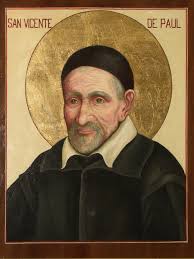
Born in 1581, St. Vincent de Paul grew up as a normal child. His family owned property as well as livestock, and he would attend weddings and go out just as any other boy would. At 20 years old, he was ordained but viewed priesthood as an economic opportunity to take care of his family. At the beginning of his career as a priest, he had a series of favoring appointments which helped him develop connections to some of the highest nobles in France. 

St. Vincent de Paul’s conversion was a slow, lifelong process. He felt that God spoke to him through certain people and events throughout his life. In the first sermon he ever gave as a priest, he spoke on the necessity of confession. He also established the five virtues that would define his mission. These virtues are simplicity, humility, gentleness, mortification, and zeal. 

The documentary “Vincent de Paul: Charity’s Saint” gives direct insight into what the Vincentian mission is all about. St. Vincent de Paul dedicated his life to helping those less fortunate, and anyone who can even give back once is living the Vincentian way. 

To me, the Vincentian way involves giving back to those less fortunate, but also extending a helping hand to everyone. As a Vincentian University, St. John’s lives out St. Vincent de Paul’s mission through the ASL program, as well as using his teachings in every aspect of our daily lives. By doing community service and giving back, we as students are truly living the Vincentian way.

Reference:

Mission and Ministry DePaul University. Vincent De Paul: Charity’s SaintYouTube, YouTube, 17 Apr. 2014, http://www.youtube.com/watch?v=vqSpwwojTcs.

Martin Luther Blog Post

In October of 1517, a man named Martin Luther was enraged with the ways of the of the Catholic Church. He studied the bible diligently and overtime came to disagree with many of the teachings of the Catholic Church. His anger culminated with his 95 theses. He objected to the sale of indulgences, which were documents written by the church releasing individuals from their sins. He nailed his 95 theses to the churches front door, and copies were also distributed across across Germany and then throughout Europe.

Christian Liberty was the “summary of the Christian life”, and at the time the church was teaching that one gains salvation only from observations of the church rather than by faith alone. Luther wrote to refute that idea. He felt that non-essentials were taking up too much space in peoples lives and more time should have been spent giving back. Essentially, Luther felt that people were not being generous enough for the amount of non-essentials that were in their lives.

I believe in Luther’s ideas. He did not want faith to be forced onto people, or the church to be too authoritative. As a man of faith, war was definitely not his goal. While his ideas were challenged and met with conflict, he was a good man who was sent from God to carry out his will.

Nicene Creed Rewrite

I believe in one all-powerful God, the creator of heaven and Earth.

Through the Lord and savior Jesus Christ, the only Son of God, completely human and divine.

For our salvation he became human, born of the Virgin Mary through the Holy Spirit, and through his crucifixion for our sins at the hands of Pontius Pilate.

He suffered, was buried, and rose again on the third day in accordance with scriptures, and returned to heaven to be seated at the right hand of the father.

He lives to judge the living and the dead and his kingdom will live on for eternity.

Parable Project

The modern day version of The Parable of the Prodigal Son involves a factory-worker father and his two sons. The family lives a comfortable life, with the father providing enough for his family to live without worry. The older son is exactly like his father, working a lowly job under his father, in hopes of following in his footsteps and taking over his business one day. The younger son sees himself doing much different than his father or brother. He dreams of moving to Los Angeles and becoming an actor. The younger son reached a time where he could no longer stand working for his father anymore, and after asking for months his father finally gave in and gave the younger son his inheritance in order to pursue an acting career in California. The son sets off and tries his very best to become a famous actor, but falls short and runs into tough times. After finally scavenging enough money to fly home, he returns home embarassed to confront his father. To his surprise, his father was overcome with emotion when he saw him, and immediately embraced him. After hearing about his situation, the father offered the youngest son his old job back, a place to stay, and decided to have a welcome home party in his honor. This frustrated the older son who had never questioned his father or his future, and had never been celebrated before. His father assured him that everything he had ever done was for them two, and all he wants is them to be together again. 

In “New Interpreter’s Dictionary of the Bible” by ***, A parable is defined as a “speech that carries over a similarity of likeness from one thing to another and is used in argumentation to embellish, clarify, prove, or vivify” (Sakenfeld, 369). This is proven true in The Parable of the Prodigal Son as Luke tries to prove and vivify the relationship between the father and both of his sons before and after the youngest son leaves home. This source gives a general overview of narrative parables and the literary types used in the bible. These include similes and similitude, Allegory, Example Stories, Exhortation, and Parables and the Kingdom of God. 

The Prodigal Son is one of Jesus’s most famous and well known parables for many reasons. It’s simpleness makes it easy to teach to younger kids, but a deeper dive into the story offers incredible deeper meanings. The story also stands out for other reasons, including its third person narration. In Hear Then The Parables by Bernard Brandon Scott, he indicates that the story is introduced with “Then he said” (Luke:15:11), which blocks the fictional identification with the man. The pattern of feeling lost, found, and rejoicing is repeated in the story through the younger son being “lost” and then returning and his father celebrating his return. Another interesting detail from this parable is the double audience that it offers. (Scott,103) The fictional audience of the primary narrative is prevalent, as well as the implied readers of the actual gospel. This story is translated for the “modern” listener through the use of the mytheme of two-son stories, which were common in the Hebrew bible. This parable also constructs family in a very narrow way, with no mothers or daughters spoken of in the entire story. 

One of the main misconceptions of this story is whether or not the interest has to do with the morality of accepting his son back or the son asking for his inheritance early, but it truly revolves around the unity of his sons (Scott,125). One author feels that the younger son severely disrespected his father by asking for his inheritance early. “By leaving his father, he cast aside his obligation to care for him in old age. He rejected the duty of a son to honor his father and mother, as spelled out in the Decalogue”. (Hultgren, 73) By going away to a distant country, the younger son geographically and psychologically distanced himself from his father, as well as from his brother. While what the younger son did was awful in the eyes of this author, he eventually “came to himself” and repented when he returned and offered himself to his father. (Hultgren, 76). Another image used was having the son return home barefoot. This symbolized the bestowal of freedom, and the hit the younger son’s social class took when he went to work for someone else when he ran out of money. 

This incredible tale told by Jesus and transcripted by Luke included countless life lessons as well as examples of how God’s love trumps all. The Parable of the Prodigal Son shows God’s profound love for everyone, and that he is always ready to forgive those who seek repentance with open arms.

Works Cited

Scott, Bernard Brandon. Hear Then the Parable: a Commentary on the Parables of Jesus. Fortress Press, 1990.

Hultgren, Arland J. The Parables of Jesus: a Commentary. W.B. Eerdmans, 2000.

The Interpreters Dictionary of the Bible: Volume 4: R – Z. Abingdon Press, 1962.

Was Dr. Martin Luther King Jr. a False Prophet?

While there have been false prophets in history, Dr. Martin Luther King Jr. does not fall into this category. To embody every quality a true prophet has is incredibly rare, but Dr. King absolutely represents everything a prophet should. Those who are specifically chosen by God to lead people out of discrimination and persecution are the true representation of prophets. Dealing with hatred from the masses is no easy task, and in the inspiring, peaceful ways Dr. King dealt with racism in America qualifies him as a prophet to the highest extent.

Dr. King’s “I’ve Been to the Mountaintop” speech is easily one of his most well known and inspirational speeches. It took place in Memphis, Tennessee on April 3rd, 1968, where Dr. King spoke about city workers on strike. He made clear in his speech that he did not expect to be with his brothers and sisters when they reached the “promised land”, and he was sadly right. The very next day Dr. King was assassinated by James Earl Ray. He left his people with a fearless message engraved in their minds, and that no matter what might happen to him, to keep fighting. Few prophets if any actually see their work come to fruition, and that was the case with Dr. King.

There is certainly no argument for Dr. King being a false prophet. False prophets offer bad moral examples, and either make up or steal their preachings from others. Dr. King is one of the most inspiring people in the history of the United States and maybe the entire world. His speeches and teachings inspired millions of African Americans to stand up to oppression in ways that would not set them back as a community. He never wavered in his efforts even with the constant threats on his life and the lives of those following him. 

Reverend King represents everything a true prophet ever could. He never preached anything he did not believe in, and was a moral standard himself. He is one of the most important and inspirational figures of the 20th century and his legacy will live on for the rest of time.

Design a site like this with WordPress.com
Get started